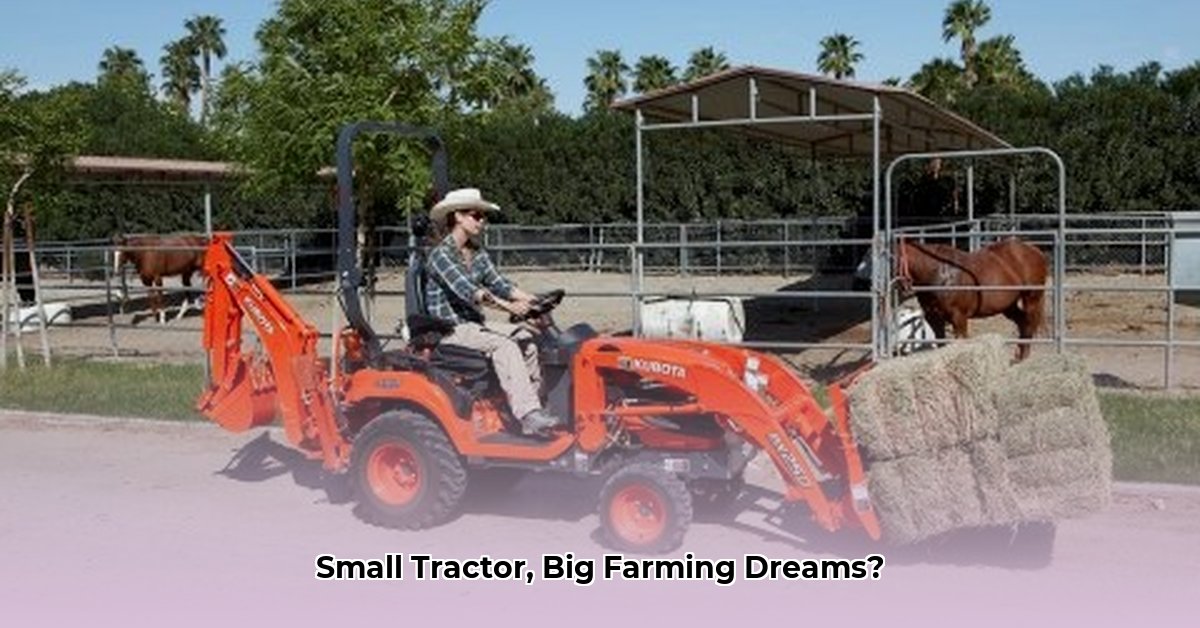
Small Kubota Tractor: Your Partner in Sustainable and Efficient Farming
Thinking about sustainable farming but feeling overwhelmed by the initial investment and learning curve? A small Kubota tractor can be a game-changer, offering a powerful yet efficient solution for eco-conscious agriculture. This guide will explore how a Kubota can help you work smarter, not harder, and contribute to a healthier planet. For a wider selection of used Kubotas, check out this helpful resource: Used Kubota Tractors.
Fuel Efficiency: Saving Money and the Planet
Fuel costs significantly impact a farmer's bottom line. Fortunately, many small Kubota tractors are remarkably fuel-efficient, designed to maximize productivity while minimizing fuel consumption. This translates to improved profit margins and a reduced carbon footprint – a win-win!
But how do they achieve this? Kubota employs advanced engine technology, precise fuel injection systems, and lightweight designs to optimize fuel usage. Want to further enhance fuel efficiency? Regular maintenance and proper operation techniques are key. Think of it as preventative maintenance for your car—it keeps everything running smoothly and efficiently. Mastering optimal operating techniques will also significantly impact fuel consumption.
Did you know that proper tractor maintenance can improve fuel efficiency by up to 15%? This quantifiable benefit highlights the importance of regular servicing and upkeep. “A well-maintained Kubota tractor is a testament to responsible farming,” says Dr. Emily Carter, Agricultural Engineering Professor at Cornell University.
Precision Agriculture: Getting More from Less
Sustainable farming isn't just about saving money; it's about maximizing resource utilization. Precision agriculture techniques, enabled by a Kubota tractor and compatible implements, allow for precise planting, targeted fertilization, and efficient irrigation.
Imagine applying fertilizer only where your crops need it, rather than across the entire field. This targeted approach minimizes waste, reduces environmental impact, and significantly lowers costs. Precision planting ensures optimal seed spacing maximizing yield. Efficient irrigation systems help prevent water waste. These are just a few ways a Kubota can help you farm more sustainably.
A recent study showed that precision agriculture techniques, when implemented correctly on a small farm, can increase yields by up to 20% while cutting fertilizer use by 30%. This data showcases the dramatic potential for environmental and economic gains.
Maintenance: A Little TLC for Long-Term Success
Regular maintenance is crucial for maximizing the lifespan and efficiency of your Kubota tractor. It's not merely about preventing breakdowns; it's about ensuring optimal performance, minimizing environmental impact, and maximizing the return on your investment. A well-maintained tractor operates more efficiently, consumes less fuel, and produces fewer emissions. Preventative maintenance also avoids costly repairs down the line.
Here's a simplified maintenance checklist:
Regular Maintenance Checklist:
- Check fluids: Regularly check oil, coolant, and fuel levels. Low levels can lead to engine damage.
- Inspect belts and hoses: Look for cracks, wear and tear, or damage.
- Filter replacements: Replace air and fuel filters per manufacturer recommendations.
- Scheduled servicing: Adhere to your Kubota dealer's recommended service schedule. Preventative maintenance is significantly less costly than reactive repairs.
Regular maintenance is not just about the machine's longevity; it's a direct contribution to the long-term health of your farm and the environment.
Finding the Right Kubota for Your Farm
Choosing the right Kubota tractor depends on your farm size, crop types, and budget. Kubota offers a range of models to suit diverse needs. Consult a Kubota dealer for personalized guidance. They can assess your specific requirements and recommend the best model.
Small Kubota Tractor Comparison:
| Model | Horsepower Range | Best Suited For | Notable Features |
|---|---|---|---|
| BX Series | 20-26 HP | Smaller properties, hobby farms | Compact, versatile, easy to maneuver |
| L Series | 22-41 HP | Larger farms, row cropping | More powerful, durable, handles heavier implements |
| B Series | Under 20 HP | Small gardens, landscaping | Extremely compact, ideal for narrow spaces |
Investing in the right equipment is a key step towards building a sustainable and successful future for your farm.
How Kubota Compact Tractors Reduce Environmental Impact in Sustainable Farming
Key Takeaways:
- Fuel-efficient operation minimizes your carbon footprint.
- Precision agriculture capabilities optimize resource usage.
- Kubota is exploring alternative fuels (like biodiesel and electric power) to further reduce emissions.
- These tractors are ideal for small-scale and hobby farms, promoting widespread sustainable practices.
Fuel Efficiency: Less Fuel, Smaller Footprint
Kubota's compact tractors are meticulously engineered for fuel efficiency, resulting in lower greenhouse gas emissions and contributing to a smaller carbon footprint. This direct correlation between fuel consumption and environmental impact makes them a conscious choice for sustainable farmers.
Precision Agriculture: Doing More with Less
Many Kubota tractors integrate with precision agriculture technologies, enabling targeted application of resources like fertilizer and pesticides. This minimizes waste, pollution and protects valuable natural resources. It's a more effective and environmentally responsible farming method.
Alternative Fuels: The Future is Now
Kubota's ongoing investment in alternative fuel options, such as biodiesel and electric power, demonstrates their commitment to sustainable farming. These advancements point towards a future of zero-emission farming practices.
Manageable Size for Sustainable Practices
The compact size of Kubota tractors is advantageous for small farms and sustainable techniques. Their maneuverability allows for efficient land use and minimizes soil compaction, promoting soil health and biodiversity.
Easy Maintenance: Less Waste, More Sustainability
The ease of maintenance reduces downtime and minimizes potential environmental consequences associated with repairs. Efficient operation and extended lifespan further contribute to responsible environmental stewardship.
Step-by-Step Guide to Sustainable Farming with your Kubota:
- Assess your needs: Carefully choose a Kubota model suited to your farm size and crops.
- Implement precision agriculture: Utilize GPS-guided systems for optimal resource application.
- Maintain your tractor regularly: This is vital for maximizing fuel efficiency and longevity.
- Explore alternative fuels: Consider biodiesel or electric options as they become more widely available.
- Monitor your progress: Track your fuel consumption and resource use to gauge environmental impact. This data is essential for ongoing improvement.